Xier International Logistics: An AI Transformation Journey of a Xinjiang B2B Enterprise
Xier International Logistics: An AI Transformation Journey of a Xinjiang B2B Enterprise
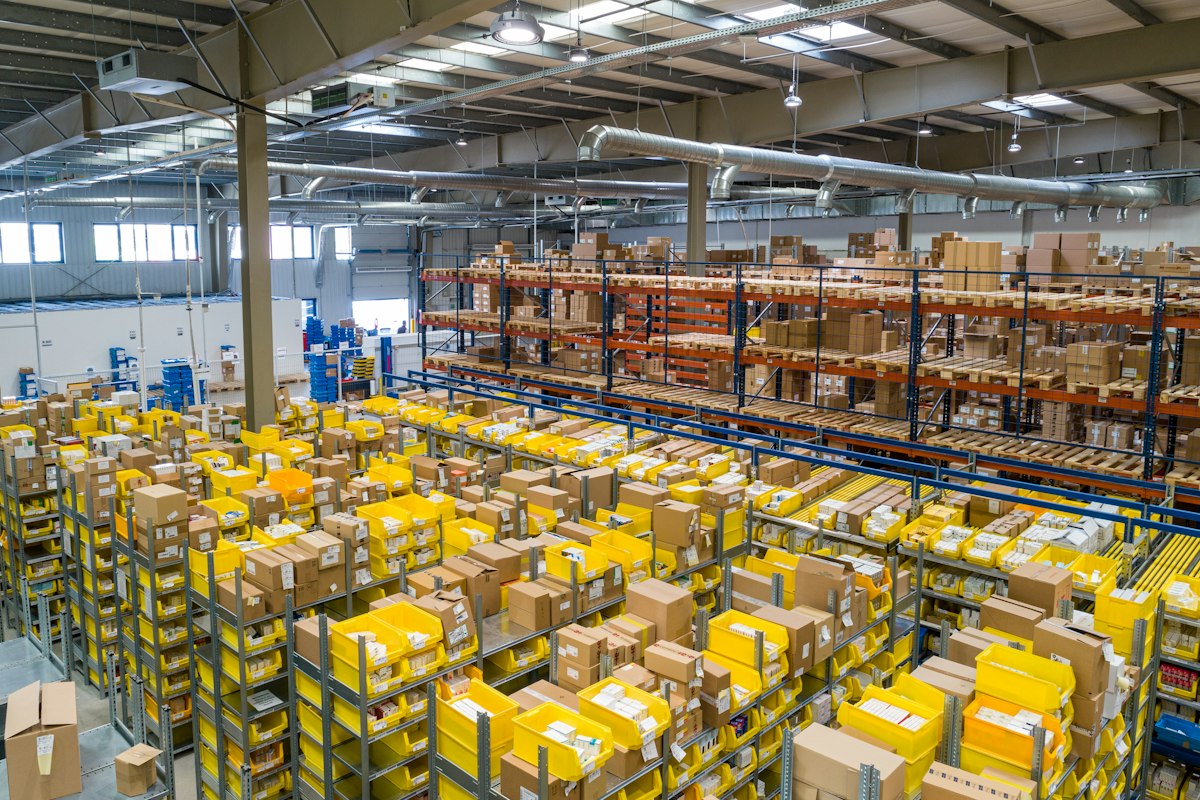
Urumqi, Xinjiang — at the foot of the Tianshan Mountains, on the frontier of China westward opening. A B2B logistics enterprise named Xier International had been operating here for nearly 20 years, specializing in international freight transport, customs clearance, and overseas warehousing across the five Central Asian countries and European routes. In early 2025, when this company approached us, their request was straightforward: Can AI be used to improve operational efficiency?
This was not a technical project to "install a system." It was a business proposition to "use AI to solve real problems."
01 Why Is AI Transformation for B2B Logistics Enterprises Harder Than Imagined?
B2B logistics is "hard work." Many routes, complex processes, extensive documentation, multiple languages, and frequent exceptions. A standard container going from Khorgos exit to Almaty may involve customs clearance documents in four languages — Kazakh, Russian, Chinese, and English — covering customs, quarantine, railway, and port checkpoints. Any bottleneck at any node slows the entire chain.
Xier International core pain points, boiled down, were three:
- Slow customs clearance: A single customs declaration form — manually verifying HS codes, reviewing documents, and entering data into the system — took an average of 2-3 business days. During peak season backlogs, it could take a week to clear customs.
- Difficult tracking: After goods left the country, there was no real-time data for the overseas segment. When clients asked "Where is my cargo?", customer service could only send emails and wait for the railway operator to reply — a response cycle of 4-6 hours, resulting in poor customer experience and high complaint rates.
- Customer service pressure: Over 86% of inquiries were repetitive (pricing and transit times, customs requirements, document checklists), yet each one required a manual response. During peak times, three customer service reps were not enough, and outside working hours, there was complete disconnection.
These three problems, fundamentally, were information asymmetry + intensive repetitive labor + lack of round-the-clock response capability. And these three problems happen to be exactly what AI is best at solving.
02 Three Steps: AI Reconstructs Customs Clearance, Tracking, and Customer Service
Step 1: Intelligent Customs Clearance — From "People Waiting for Documents" to "Documents Waiting for People"
The traditional customs clearance process was sequential: shipper submits documents → customer service does initial review → customs broker verifies → enters system → waits for approval. Each step was driven by people, and information was passed between steps via email or WeChat — low efficiency, error-prone, with information gaps.
The customs clearance AI module we designed for Xier had a core logic of parallel processing + automation:
- Intelligent document recognition: Upload invoices, packing lists, certificates of origin, and other attachments; AI automatically extracts key fields (product name, quantity, HS code, declared value), generates structured data tables, and humans only need to verify and confirm.
- HS code intelligent recommendation: Based on product description, AI recommends the best-matching HS code from the customs database, with confidence scores, reducing the probability of rejections due to code errors.
- Compliance pre-check: Based on the latest policy database of the five Central Asian countries customs authorities, AI automatically checks for common compliance issues (e.g., declared value too low, missing documents, expired licenses) before submission, providing early warnings to reduce rejections.
Implementation results: Customs document processing time was compressed from an average of 3 business days to as fast as 4 hours, with error rates down 62%. More importantly, customs brokers were freed from repetitive data entry and could focus on genuinely complex cases.
Step 2: Transport Tracking System — Making the "Black Box" Transparent
The biggest information black hole in international logistics is after goods leave the Chinese border. Within Kazakhstan, on Russian railways, Xier cargo was in a "disconnected" state — when clients asked, the only answer was "Let me check for you."
We integrated three data sources to build the tracking AI:
- Overseas partner API integration: Established data interfaces with Kazakhstan Railways, Almaty Customs, and overseas warehousing service providers to pull cargo status in real time.
- Anomaly event AI detection: Under normal transport conditions, cargo dwell time at each node has a fixed range. When AI detects abnormal dwell times, it automatically triggers alerts, flags "possible anomaly," and pushes to customer service for early intervention.
- Multilingual smart notifications: The system automatically generates customer notifications in Chinese, Russian, and Kazakh. No matter which country the client is in or what language they speak, they receive cargo status updates.
Key Insight: B2B logistics tracking needs are completely different from B2C. B2C customers care about "Will it arrive tomorrow?"; B2B customers care about "How big is the delay risk, and should we activate backup inventory plans?" The value of tracking AI is not just notification, but prediction + action recommendations.
Results: Customer inquiry response time was compressed from 4-6 hours to under 15 minutes. Anomaly detection shifted from "discovered after client complaints" to "proactively notified after system alerts." Client satisfaction improved significantly.
Step 3: Intelligent Customer Service — Let AI Handle Repetitive Work, Let People Focus on Clients
We designed a "tiered filtering" mechanism for Xier customer service AI:
- Tier 1 (AI): Automated responses for common questions — pricing and transit time queries, document checklist delivery, customs requirements explanation. The AI knowledge base contained all of Xier product routes, service terms, and common FAQs.
- Tier 2 (AI + Human): Complex questions get AI pre-assessment + human handoff. AI analyzes client question intent, generates recommended reply drafts, and customer service only needs to review and send — 3x efficiency improvement.
- Tier 3 (Human): VIP client complaints, contract negotiations, and large orders retain fully manual handling, maintaining service warmth.
Customer service AI first-week data:
| Metric | Before AI | After AI | Change |
|---|---|---|---|
| Average response time | 2.3 hrs | 3 min | ↓97% |
| 7x24 coverage | Working hours only | 24/7 | ↑100% |
| Repetitive question handling rate | 0% | 86% | ↑86pp |
| Client satisfaction | 71% | 92% | ↑21pp |
03 Three-Month Review: How Much Invested, How Much Gained?
In Q1-Q2 2025, Xier International three AI modules went live sequentially. Three months later, we conducted a comprehensive review:
Cost savings came from three areas: customer service staffing was reduced from 3 to 1 (focused on complex issues), improved customs efficiency reduced expedited orders, and lower rejection rates saved re-declaration costs. More importantly, improved client satisfaction drove higher renewal rates — value that showed up directly in revenue.
04 What Can Other B2B Logistics Enterprises Learn from This?
The Xier case is not a story about "how amazing AI is," but a pragmatic path of "using AI where it cuts best." A few replicable lessons:
(1) Diagnose First, Then Select Entry Points
AI is not a panacea. First, identify repetitive work and high-frequency pain points in your business processes, calculate clearly "how much time/money can AI save in this specific step," and then decide where to start. Do not use AI for the sake of using AI.
(2) The Knowledge Base Is Infrastructure — Build It Before Deploying AI
In Xier experience, the most time-consuming part was not developing AI modules, but structuring the company accumulated customs clearance experience, customer service scripts, and industry knowledge into a knowledge base. Knowledge base quality directly determines the ceiling of AI effectiveness. Cutting corners here guarantees subpar AI output quality downstream.
(3) Deploy in Stages, Do Not Launch Everything at Once
Xier approach: Deploy customer service AI first (fastest results, least internal resistance), then customs clearance AI after validating effectiveness (requires business department cooperation), and finally the tracking system (requires external data source integration). Each step had quantifiable acceptance criteria — no moving to the next step until the current one met standards.
(4) The Boss Uses It First, Then Rolls Out to Everyone
Xier Operations Director personally used the customer service AI to handle a few client inquiries first, felt that "it genuinely saves effort," and only then trained and rolled it out to the team. Top-down AI adoption is typically 3x faster than bottom-up.
What's Your Brand's Status in AI Search?
Chengying Ruanbo offers a free brand AI search presence check, covering mainstream platforms including Doubao, Qianwen, Wenxin, and DeepSeek. Report delivered in 3 minutes.
Free Check Now →